How to Tell If Scrunch Leggings Will Be See-Through Before You Buy Them
Quick Answer: A scrunch seam gathers fabric to create shape, which means the surrounding fabric is stretched further than it would be in a plain legging. Check four things: fabric weight, which should be at least around 250gsm for reliable opacity, the stretch test where you pull the fabric over your hand and look for light, the colour, since light and mid tones fail before dark ones, and the seam construction, where a wide flat scrunch panel handles stretch better than a narrow gathered line.
Scrunch leggings have a specific failure mode that plain leggings do not. The design concentrates tension around the seam, and if the fabric is not up to it, the area right where everyone is looking is the area that goes sheer.
The good news is that all four predictors are checkable, and two of them work before you buy.
Why does the scrunch seam create a coverage problem?
Because gathering fabric in one place puts more stretch on the fabric around it.
A scrunch is created by sewing a longer piece of fabric to a shorter seam line, or by gathering along a curved center-back seam. Either way, the result is intentional dimensional shaping.
Under wear, the geometry works against you:
- The gathered area is already under tension from the construction
- Body movement, particularly squatting and sitting, adds more
- The fabric immediately adjacent to the seam takes the largest share of that added stretch
When knitted fabric stretches, the yarns separate, the effective density drops, and light passes through. Every stretch fabric does this at some point. The question is only whether your body’s normal range gets it there.
Which is why the seam is where sheerness shows up first, and why a legging that looks perfectly opaque standing up can fail in a squat.
Check 1: fabric weight and composition
Weight is the strongest single predictor and it is sometimes listed.
Working thresholds:
- Under 200gsm: thin. Expect sheerness under stretch in anything but black.
- 200 to 250gsm: midweight. Usually fine in dark colours, risky in light ones and in scrunch constructions.
- 250 to 320gsm: the reliable range for scrunch styles. Enough density to stay opaque when stretched.
- Over 320gsm: very opaque and warm, and can feel heavy for summer training.
On composition: nylon-elastane blends generally hold opacity under stretch better than polyester-elastane at the same weight, because nylon fibers are finer and pack more densely. Elastane content of 18 to 25 percent is typical for compressive fabrics.
If gsm is not listed, which is common, use these proxies:
- Words like buttery, lightweight, or barely-there usually indicate lower weight
- Words like sculpting, compressive, or contour usually indicate higher
- Price is a weak signal. Plenty of expensive leggings are deliberately thin.
Reviews are genuinely useful here if you search within them for squat, sheer, or see-through rather than reading the overall rating.
Check 2 and 3: the stretch test and the colour
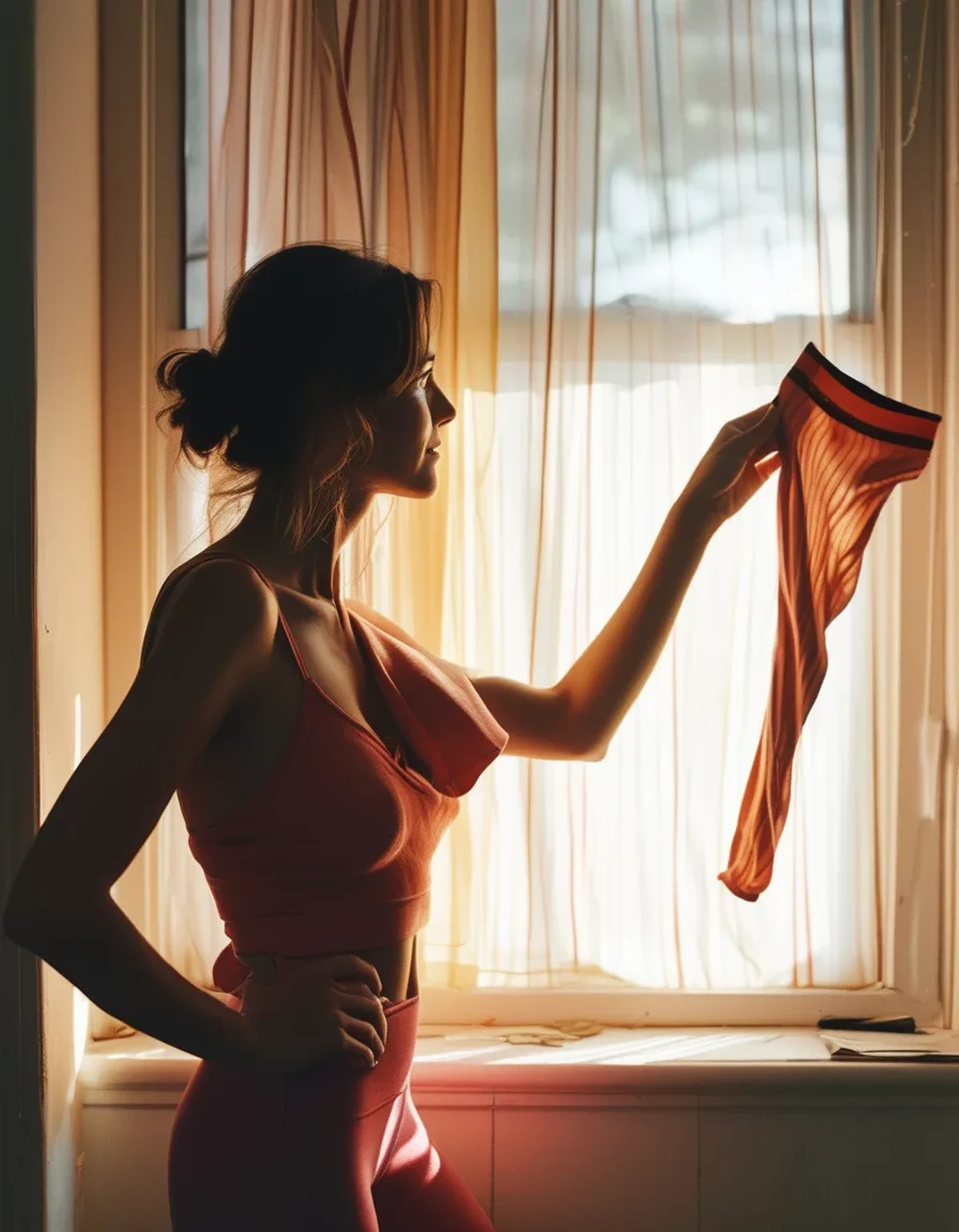
The stretch test, which works in a store or at home before wearing:
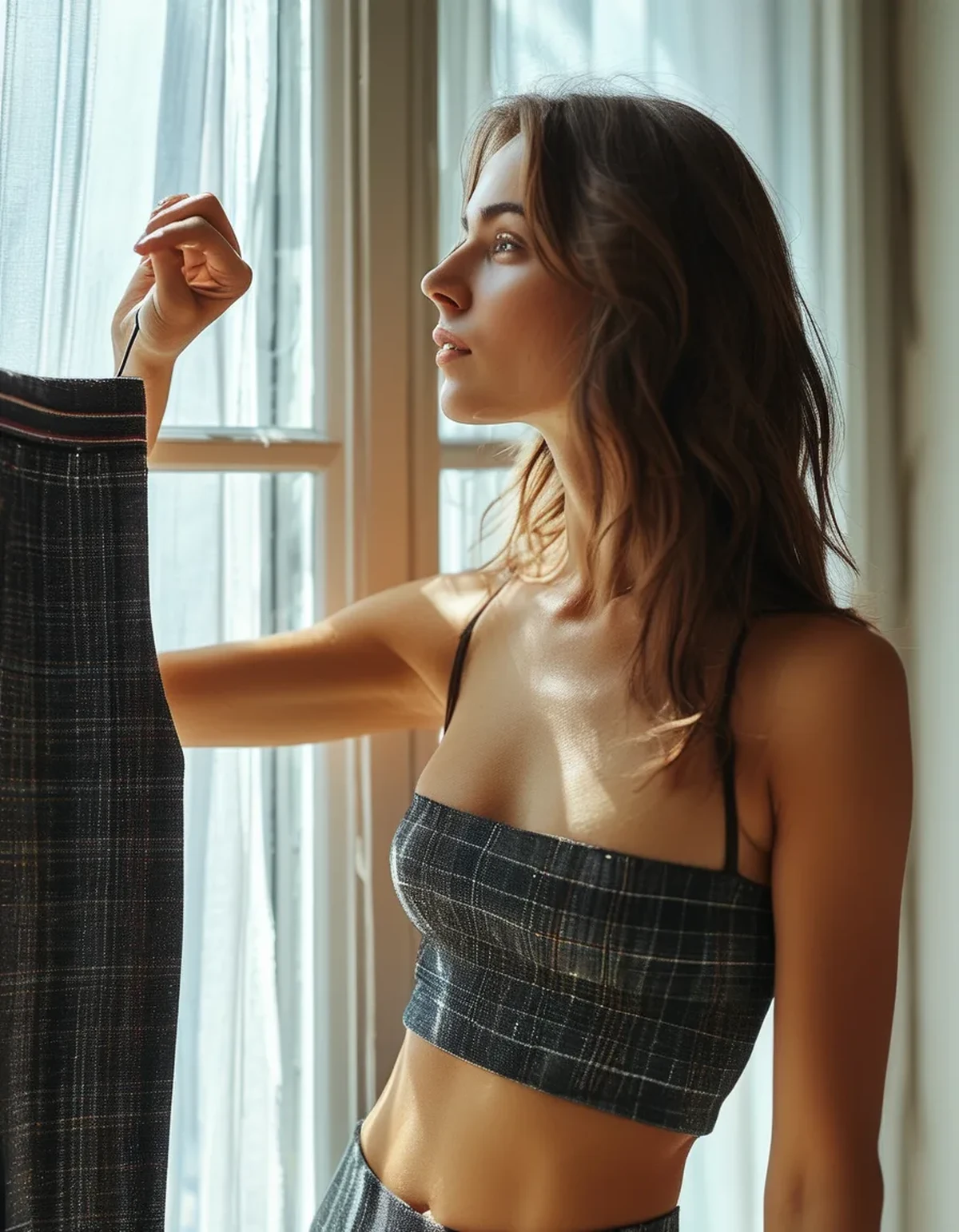
- Pull the fabric over your flat hand or your knee, stretching it to roughly the tension it will see in a squat
- Hold it toward a light source
- Look for whether you can see the outline of your hand, not just brightness through the weave
Some light transmission is normal in every stretch fabric. Being able to make out detail through it is the failure signal.
Do this test on the scrunch area specifically, not on the thigh. The thigh is the easy part.
The colour rule, which is more powerful than most people expect:
- Black hides sheerness better than any other colour, and it can hide it entirely at weights where a light colour clearly fails
- Deep saturated tones, navy, burgundy, forest, are close behind
- Mid grey is the most notorious failure, because grey marl in particular shows both sheerness and sweat
- Light neutrals, beige, cream, and pale pink, are the hardest test a fabric can face, and they show everything
Practical rule: if you want a light-coloured scrunch legging, you need a heavier fabric than you would need in black. The same style in two colours can genuinely differ in coverage, and that is not a manufacturing inconsistency, it is optics.
Check 4: seam construction, and the mirror test
Seam construction differences worth looking for:
- A wide contoured panel, where shaping comes from panel cutting rather than gathering, distributes stretch across a larger area and holds opacity better
- A narrow gathered seam concentrates it, and is the construction most likely to go sheer at the seam
- Flatlock or bonded seams sit smoother and put less local stress on the fabric than a raised overlock
- Visible puckering when the garment is flat is a bad sign, since it means the gathering is already fighting the fabric
The mirror test, once you have them on:
- Stand in normal light, squat fully, and hold
- Have someone photograph from behind, or use a phone with a timer against a mirror
- Check the photo rather than your own over-the-shoulder view, which cannot see the area properly
This is worth doing on your first wear at home, while the return window is open, rather than discovering the answer in a class.
A note on how they look in photos versus mirrors: scrunch designs photograph differently from how they appear in a mirror, because a camera flattens depth and a flash increases apparent sheerness. A pair that photographs slightly sheer under a direct flash may be entirely fine in a normally lit room. Judge in the light you will actually wear them in.
Seasonal note: as training moves indoors this fall, gym lighting becomes a bigger factor than daylight. Bright overhead lighting from above and behind is the least forgiving lighting condition for legging opacity, and it is exactly what most gyms have. A pair that was fine on summer trail walks can read differently under a squat rack. Worth a quick check on the pairs you are moving into indoor rotation.
FAQ: Scrunch Legging Coverage Questions, Answered
Are scrunch leggings more likely to be see-through?
Yes, at the seam area. Gathering fabric concentrates tension there, so the fabric around the scrunch stretches further than it would in a plain legging and separates sooner.
What fabric weight do I need for opaque leggings?
Around 250gsm or above for reliable opacity in a scrunch style. Below 200gsm expect sheerness under stretch in anything but black.
Does colour affect how see-through leggings are?
Significantly. Black hides sheerness best, deep saturated tones are close behind, and light neutrals and grey marl are the hardest test. The same style can genuinely differ in coverage between colours.
TL;DR:
- Scrunch seams concentrate stretch, so the area right at the seam is where sheerness shows first.
- Aim for around 250gsm or more, with nylon-elastane holding opacity better than polyester-elastane at the same weight.
- Stretch the scrunch area over your hand toward a light. Seeing detail, not just brightness, is the failure signal.
- Black hides the most, light neutrals and grey marl the least. Wide contoured panels beat narrow gathered seams.
Do the squat-and-photograph test at home on the first wear, while you can still return them.
See It in Motion
Seen here: Super High Waist Embossed Yoga Leggings with Inner Pocket — shop it on bubblelime.com
Keep Reading
This article is for general informational and styling purposes only. Fit, sizing, and product availability may vary.