Why Squat-Proof Testing in the Store Does Not Predict the Gym
Quick Answer: The changing room test fails because it reproduces almost none of the actual conditions. Store lighting is diffuse and overhead; gym lighting is bright and often from below or behind. The fabric is new rather than worn-in and stretched by warmth, you are standing still rather than moving under load, and the mirror is in front of you rather than showing the angle other people see. A reliable test needs bright directional light, a phone camera from behind, a full-depth squat held for five seconds, and warm fabric - which means testing at home before removing the tags.
Here is what changes between the two environments, and the test that actually predicts.
What is different about gym conditions?
Five things, and lighting is the largest.
Store lighting is designed to flatter. Diffuse, overhead, and warm - lighting engineered to make clothes look good. Gym lighting is bright, often cool-toned, and frequently comes from angles that pass light through fabric rather than reflecting off it.
Backlighting is the killer. A window, a mirror-lit wall, or an overhead panel behind you turns any marginal fabric transparent. You cannot test for this facing a mirror, because you are looking at the front-lit side.
Fabric behaves differently when warm. Body heat and sweat change how a knit sits and how much it stretches. Fabric that is opaque cold can thin measurably once you are warm - which is why the failure happens at minute twenty, not minute one.
Stretch under load is different from stretch when bending. A slow changing-room bend is a fraction of the tension of a loaded squat at depth. The bottom of a heavy set is where the fabric is at maximum extension.
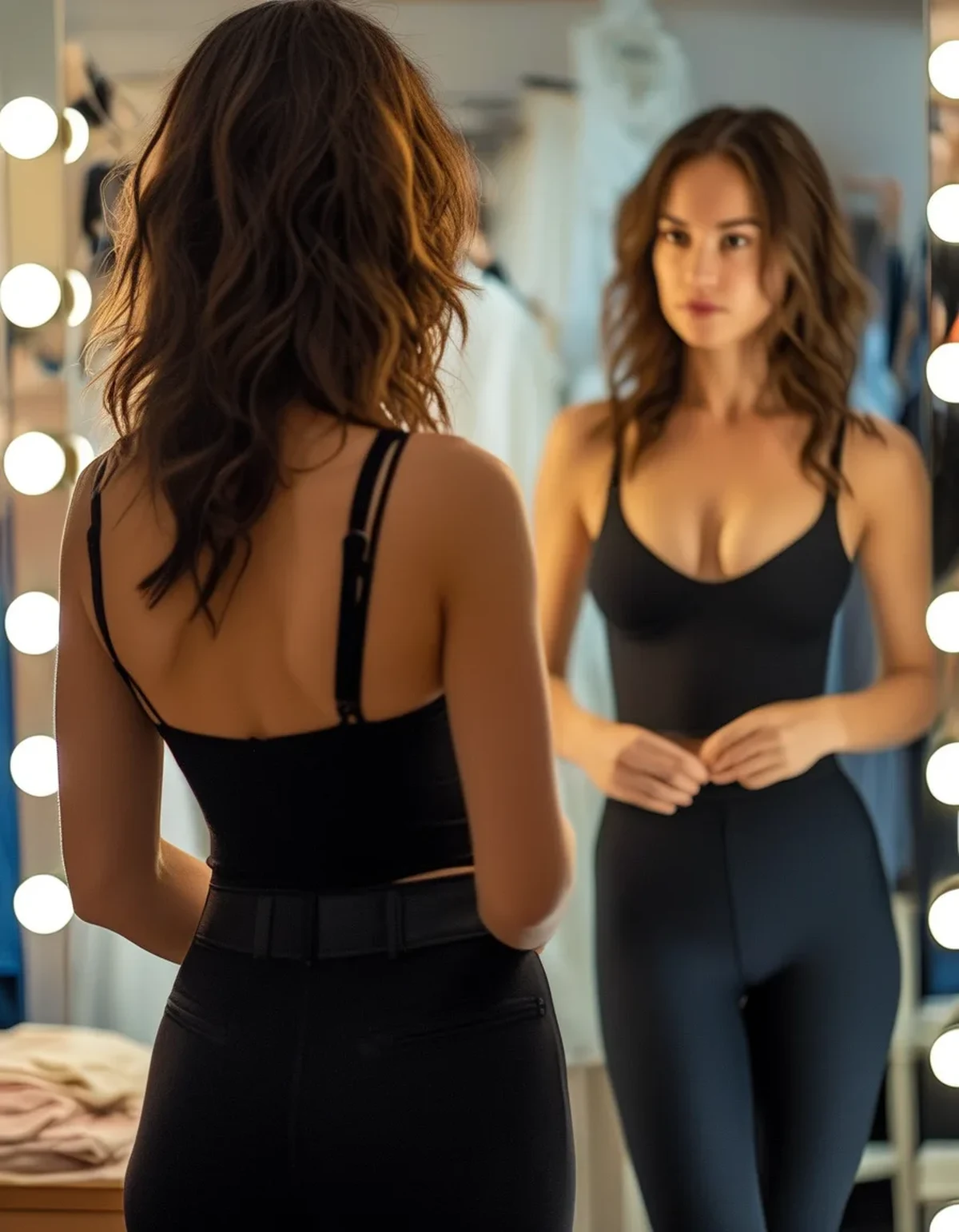
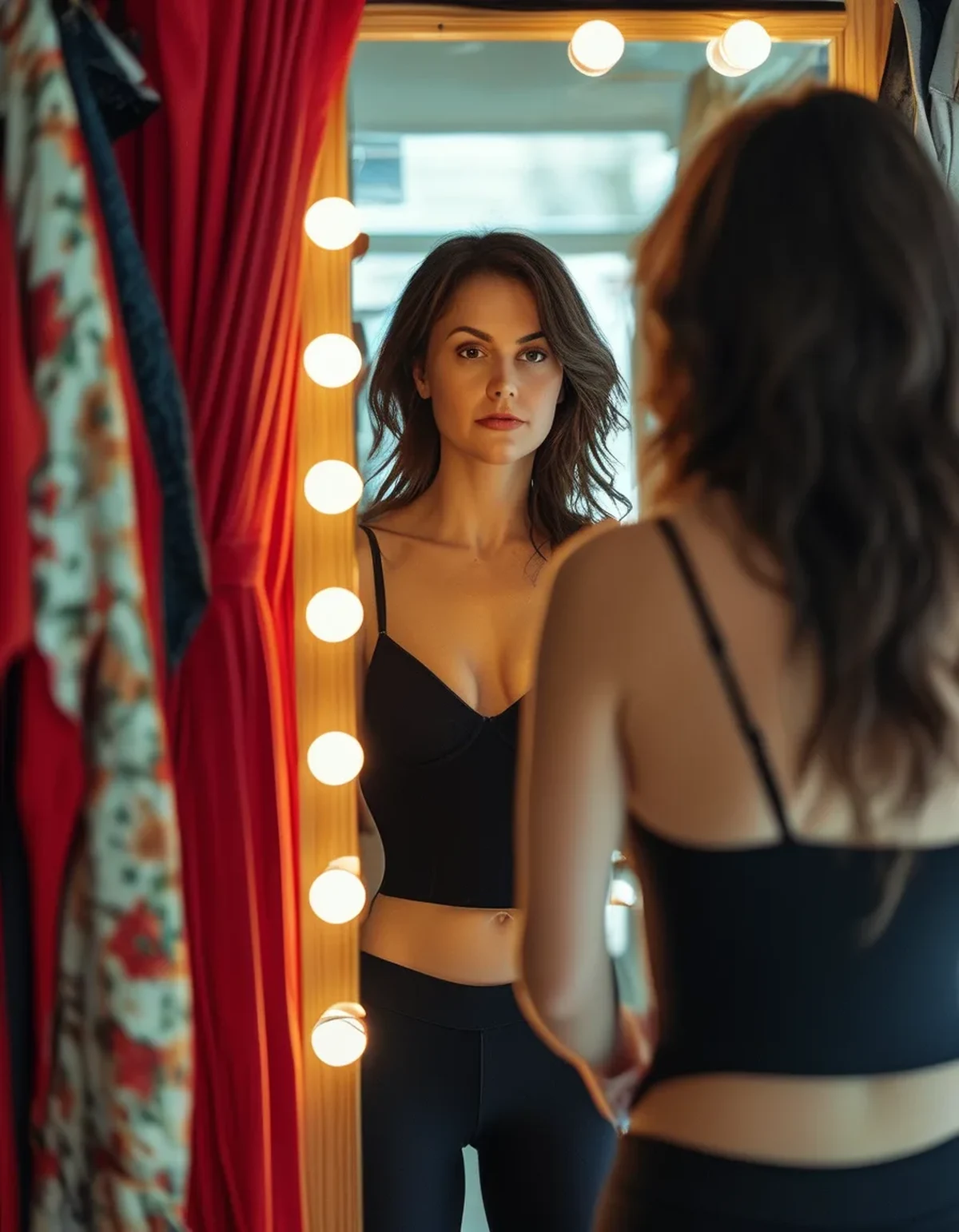
And you cannot see the angle that matters. The mirror shows you the front. The problem is at the back, at a downward angle, from three metres away - which is precisely what a phone on a bench captures and a mirror never will.
What test actually predicts?
Do it at home, with the tags still on, before wearing them out.
1. Use the brightest light you have, from behind. Stand with your back to a window in daylight or under a bright overhead light. Directional light from behind is the condition that finds every weakness.
2. Set up your phone camera behind you. Prop it at roughly knee height, two to three metres back, and record. This is the single most useful step and it is the one that reproduces what other people actually see.
3. Squat to full depth and hold for five seconds. Not a quick bend - the hold is where the fabric reaches maximum extension, and it is where thin fabric gives up.
4. Do it warm. Test after ten minutes of movement rather than cold from the wardrobe. Warm, slightly stretched fabric is the real-world condition.
5. Check in a range of positions: full squat hold, a hip hinge with a flat back, a lunge, and seated on the floor with knees bent. The seated position catches fabric that only fails when compressed.
Then watch the footage on a large screen if you can. A phone screen is small enough to hide a marginal result, and marginal is exactly what you are trying to detect.
What Nobody Tells You About Squat-Proof Fabric
Colour is a bigger variable than brand. The same fabric in black and in a light grey behaves completely differently - lighter colours and heather patterns are consistently less opaque, and marl greys are the most common failure of all.
Fabric weight is the honest predictor. Roughly 250 to 320gsm is where reliable opacity lives for most knits. Below about 220gsm, opacity under stretch becomes genuinely difficult regardless of what the marketing says.
Seam construction shows what a garment costs. Flat-lock and bonded seams distribute stretch, while cheap overlocked seams create thin lines where the fabric is pulled hardest.
A gusset in the crotch is a strong quality signal. It removes the four-seam intersection that is the most common failure point, and it improves both opacity and durability.
Size affects opacity directly. Leggings a size too small are stretched further at rest, which means less material per square centimetre before you even squat. Sizing down for compression is the most common self-inflicted opacity problem.
And they degrade. Elastane breaks down with heat, so tumble drying is the fastest route to a pair that used to be fine and no longer is. Cool wash, no fabric softener, air dry. A pair that passed the test at purchase and fails a year later usually met a dryer.
One more, rarely mentioned: underwear colour and texture change the outcome. A high-contrast or seamed pair reads through fabric that would otherwise be fine. Seamless in a tone close to the legging is the practical answer.
What should you look for before buying?
Five checks that take under a minute in a shop, plus what to do afterwards.
Hold the fabric up to a light and stretch it. Pull it in both directions - if you can see the light through it clearly when stretched, it will fail under load. This is crude and remarkably reliable.
Check the listed fabric weight if available. Brands that publish gsm are usually confident about it. Absence of the number is not proof of anything, but its presence above 250gsm is a good sign.
Look at the seams. Flat-lock or bonded, with a gusset. Turn them inside out in the shop - it takes five seconds and tells you a lot about the construction budget.
Favour darker solids for the gym and save lighter colours for lower-stakes use. Black is not a style default, it is an opacity decision.
Buy your actual size. Compression comes from fabric quality and construction, not from sizing down, and sizing down is the reliable way to make a good pair marginal.
Then do the home test before removing tags. Most retailers accept returns on unworn items with tags attached, so the real test costs nothing and is the only one that predicts the gym.
A seasonal note: as training moves indoors for autumn, gym lighting becomes the only lighting - the flattering outdoor daylight that hid marginal fabric all summer is gone. This is the season where marginal pairs get discovered, which makes now a sensible time to test the pairs you already own.
FAQ: Opacity Questions, Answered
What fabric weight is genuinely squat-proof?
Around 250 to 320gsm for most knit constructions. Below roughly 220gsm, maintaining opacity under full stretch is difficult regardless of the construction.
Are light-coloured leggings ever fully opaque?
They can be, but they need more fabric weight to achieve it and they show sweat marks more clearly. If you want light colours, expect to pay for the weight and test them carefully.
Does sizing up make leggings more opaque?
Yes, mildly - less stretch means more material per unit area. But an oversized pair introduces bunching and roll-down, so buying your actual size in better fabric is a better solution.
Why did my leggings become see-through after a year?
Almost always heat damage to the elastane, usually from tumble drying, sometimes from hot washing. Cool wash and air drying extends the usable life significantly.
Can I test squat-proofness without a phone?
A second mirror behind you works, though it is harder to hold a full-depth squat and check simultaneously. The phone is genuinely better because you can review the footage at leisure and at a realistic distance.
TL;DR:
- Store testing fails on lighting (diffuse and overhead vs bright and directional), temperature, load, and viewing angle - all four differ in a gym.
- The test that predicts: bright light from behind, phone camera at knee height two to three metres back, full-depth squat held five seconds, tested warm.
- Fabric weight of 250 to 320gsm, flat-lock or bonded seams, and a gusset are the construction signals; dark solids outperform light and marl.
- Buy your actual size - sizing down thins the fabric - and never tumble dry, which is what turns a good pair marginal within a year.
Do the test at home with tags on and you convert an expensive guess into a five-minute check. It is also worth running on the pairs you already own before the indoor season starts, because gym lighting is about to be the only lighting you train under.
See It in Motion
Seen here: High Waist Embossed Yoga Leggings with Side Pockets — shop it on bubblelime.com
Keep Reading
This article is for general informational and styling purposes only. Fit, sizing, and product availability may vary.