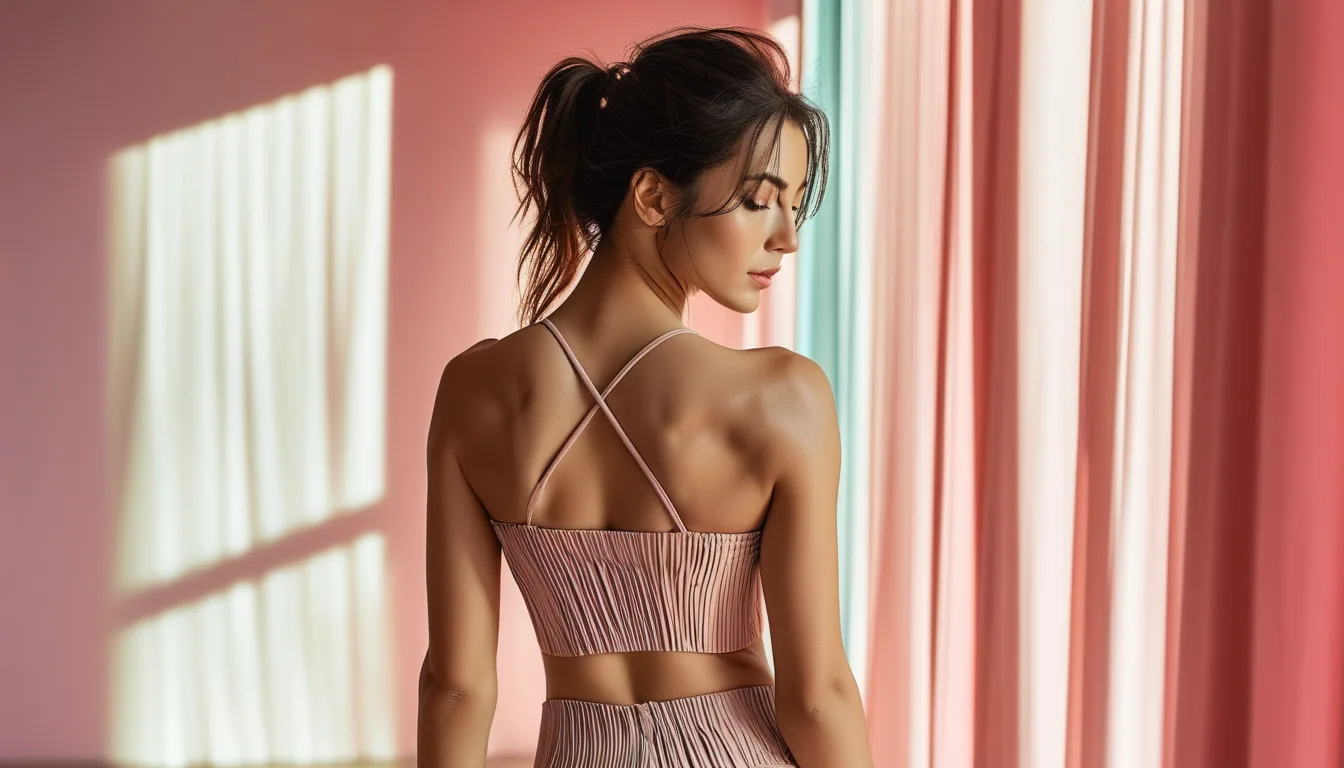
Why Contour Seams Flatter More Than Heavy Compression
Quick Answer: Contour seams flatter by drawing lines where light and shadow already sculpt - a curved seam under the glutes lifts visually, a diagonal line across the outer thigh reads as taper, a V at the back waist narrows it - while heavy compression works by squeezing tissue, which flattens shape as much as it smooths it and costs comfort all day. The eye reads lines and shadows far more than circumference, so a well-drawn medium-compression legging out-sculpts a punishing high-compression one in most bodies and most mirrors. Buy placement first, fabric second, squeeze third.
The leggings that photograph best in your closet are probably not the tightest pair. Look closer at them - the magic is stitched on, not squeezed in.

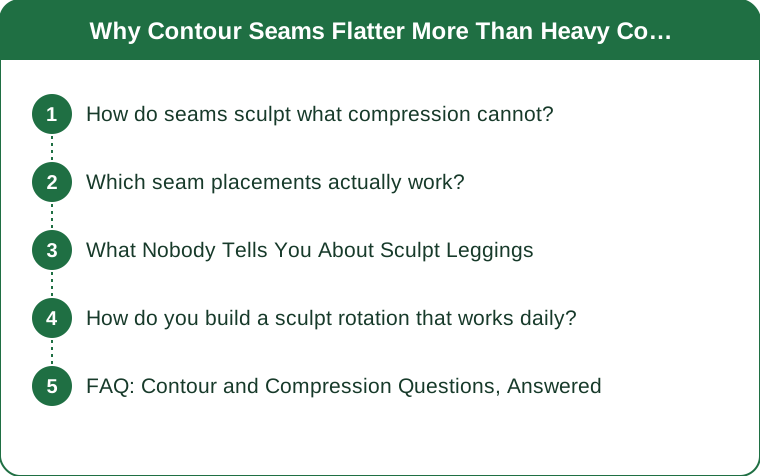
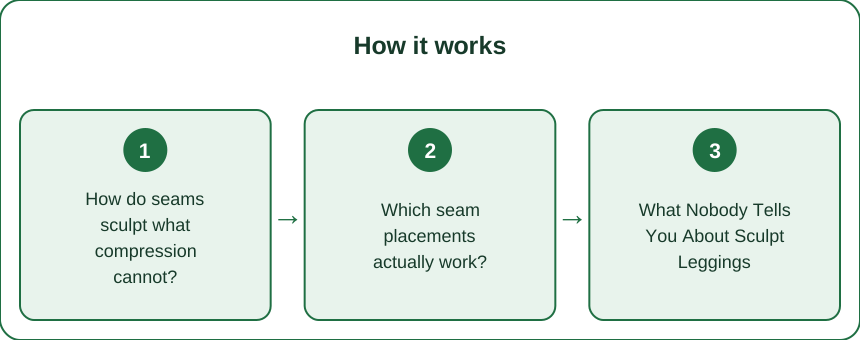
How do seams sculpt what compression cannot?
The mechanism is visual, and it is stronger than fabric pressure.
Your eye reads lines before volume. Faced with a body, the eye follows edges and contrast - seams, color blocks, shadow lines - and infers shape from them. A curved line under the glute tells the eye lifted roundness whether or not anything moved.
Seams create controlled shadow. Every raised or contrast seam casts a hairline of shadow, and shadow is how we perceive three-dimensional curve. Contour panels place those shadows exactly where a sculptor would carve - under the seat, along the outer thigh, framing the waist.
Compression edits circumference, not story. Squeezing tissue smooths surface texture and redistributes softly - real effects - but it subtracts as much as it shapes: heavy uniform pressure flattens the glutes it means to lift, because it compresses the curve along with everything else.
Placement does what pressure cannot aim. A seam can lift one specific spot; pressure applies everywhere at once. That is why scrunch-seat designs, curved back yokes, and princess-line legs became the visual signature of the sculpt category - they are drawings, and drawings can be precise.
And lines survive movement. Compression effects shift as fabric migrates through a workout; stitched geometry stays exactly where the patternmaker put it, squat after squat. The seam under your glute at 8am is still there at 8pm - the same cannot be said of a waistband’s squeeze.
The takeaway is a shopping reorder: evaluate the line drawing first. If the seams flatter on the hanger, moderate compression will finish the job comfortably.
Which seam placements actually work?
A field guide to the lines worth paying for.
The under-glute curve. A seam or dart tracing the crease beneath the seat - the single highest-value line in the category. It defines where glute ends and thigh begins, and that boundary line is most of what lifted reads as. Scrunch seams do this with gathering; clean contour seams do it with a smooth curved line - the scrunch version adds texture and drama, the smooth version adds polish.
The back-waist V or curved yoke. A downward-pointing V or deep curve across the back waistband narrows the waist visually and gives the seat a framed, rounder read from behind. On high-waisted leggings this doubles as anchoring structure.
The outer-thigh diagonal. A line running high-hip to mid-outer-thigh reads as taper in profile and three-quarter views - the panel line that makes legs look longer and leaner in mirror photos.
The front-rise clean zone. What is not there matters: a front panel free of center seams sits smooth and avoids unwanted attention lines. The best sculpt designs spend their seams on the back and sides and keep the front quiet.
Vertical side lines. Full-length side seams or side color panels add height and continuous line - the classic reason contour leggings elongate in photos where seamless pairs read soft.
What to be skeptical of: decorative seams that cross the widest point of the thigh horizontally - they widen - and heavy raised seams positioned where you fold, at the hip crease and behind the knee, which dig by hour three. Every line should either sculpt or stay out of the fold zones; a seam doing neither is just future chafe.
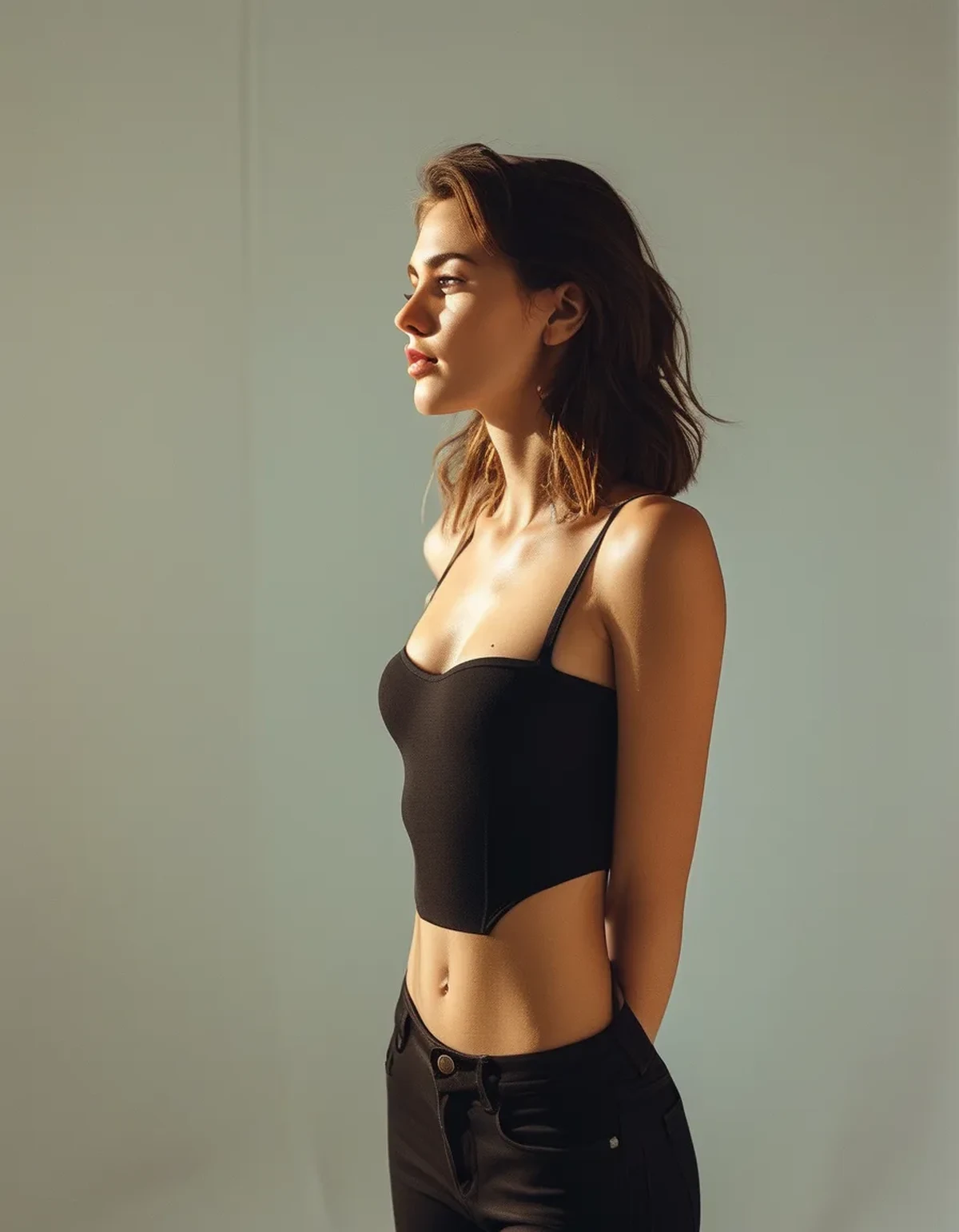
What Nobody Tells You About Sculpt Leggings
Squeeze has a comfort budget, and you feel it by afternoon. Heavy compression is a sensation you rent hour by hour - waistband dig at lunch, calf marks by evening. Contour lines cost nothing to wear, which is why seam-led pairs become the everyday favorites while the tightest pair stays a special-occasion garment.
Fabric finish is a silent partner. Matte fabrics deepen seam shadows and hide surface texture; shiny finishes flatten the drawing and highlight every ripple. The same contour pattern sculpts harder in matte brushed knit than in glossy compression fabric - one reason buttery-soft matte pairs punch above their compression class.
Color changes the volume of the lines. Tonal seams whisper; contrast stitching shouts. Dark monochrome pairs rely on shadow alone and flatter almost universally; contrast-stitched pairs commit you to their exact geometry being right for your proportions. Try contrast versions in motion, not just standing.
Scrunch is a dial, not a binary. Light gathering adds shadow texture and lift; aggressive ruching adds volume - which flatters some seats and overwhelms others. If a scrunch seat photographs bigger than you like, the smooth contour-curve version gives the lift without the bulk.
Size up before you give up. A contour pair that ripples or folds at the seams is usually a size small, not a design failure - the lines need the fabric slightly tensioned to draw cleanly. Sculpt designs are the category where between-sizes should round up.
And the mirror test has a protocol: check standing front, profile, and the over-shoulder back view, then squat and re-check. Seams that stay on their lines through a squat are patternmaking worth paying for; seams that migrate were only ever styled for the hanger.
How do you build a sculpt rotation that works daily?
Placement-first buying, then matching pairs to jobs.
The daily driver: medium compression, full contour map. Under-glute curve, back V yoke, clean front, matte fabric. This pair does errands, work-from-home, studio classes, and coffee - all-day comfort with the full line drawing. Most wardrobes want two of these before anything else.
The training pair: sculpt lines plus squat-proof fabric. For the gym, the seams matter and the opacity matters more - contour pairs in thicker interlock knits hold their drawing through squats without sheerness. High-waisted versions with a curved yoke double as light core support on lifting days.
The occasion pair: the drama option. Deeper scrunch, contrast stitching, or high-shine fabric for the days the leggings are the outfit. Rented comfort is acceptable here because the wear window is hours, not days.
Pair tops to the seam story. Contour leggings do their best work with tops that end above the under-glute line or crop at the waist - a longline tee erases the exact geometry you paid for. Fitted tanks, cropped sweatshirts, and tied-waist layers keep the drawing visible.
Care for the lines like tech, not basics. Seam-heavy pairs are the ones where washing inside out in a mesh bag genuinely matters - raised seams abrade first, and a frayed contour line is a broken drawing. Cold wash, hang dry, and the geometry outlives the fabric around it.
And audit by photo, not squeeze. Once a season, photograph your rotation in the same mirror and light. The pairs that keep earning their spot are almost never the tightest - they are the best-drawn. Buy the next pair accordingly.
FAQ: Contour and Compression Questions, Answered
What is the difference between contour leggings and compression leggings?
Contour leggings sculpt with placed seam lines - under-glute curves, waist Vs, thigh diagonals - that draw shape visually. Compression leggings sculpt with fabric pressure that smooths and squeezes. Most flattering pairs combine moderate compression with a good seam map; the seams do the aiming.
Do contour seams actually make a difference?
Yes - the eye reads lines and shadows more than circumference, so a curved seam under the glutes or a back-waist V measurably changes how lifted and narrow the silhouette reads, in person and especially in photos. It is the same principle as color blocking, executed in stitching.
Are scrunch seams flattering for everyone?
The light versions flatter most bodies; aggressive ruching adds volume that suits some seats and overwhelms others. If scrunch photographs bulkier than you want, a smooth contour curve under the glute gives the same lift line without the gathering.
Is heavy compression worth the discomfort?
For all-day wear, usually not - heavy squeeze flattens curve along with texture and charges you comfort by the hour. Medium compression with well-placed seams out-flatters it in most mirrors. Save the heaviest pairs for short-window occasions.
Why do my sculpt leggings ripple at the seams?
Almost always a size too small or fabric overstretched past its drawing tension - the lines need light, even tension to lie flat. Size up in seam-heavy styles, and check that the ripple disappears when the fabric relaxes; if it stays through a squat, the patternmaking is the problem.
TL;DR:
- The eye reads seam lines and shadows, not circumference - placement beats pressure for flattering.
- The high-value map: under-glute curve, back-waist V, outer-thigh diagonal, quiet front.
- Matte fabric deepens the drawing; tonal seams flatter universally, contrast seams are a commitment.
- Buy medium compression with great seams for daily wear; save heavy squeeze for short occasions.
- Size up when seams ripple, keep tops cropped to show the geometry, wash inside out to protect it.
Sculpting is drawing, and the best leggings are well-drawn. Pay for the lines - the comfort comes free.
See It in Motion
Seen here: Super High Waist Embossed Yoga Leggings with Inner Pocket — shop it on bubblelime.com
Keep Reading
This article is for general informational and styling purposes only. Fit, sizing, and product availability may vary.