Why Scrunch Leggings Look Completely Different Under Gym Lighting
Quick Answer: Scrunch and contour seams work by casting shadow, and shadow depends entirely on where the light comes from. Bedroom lighting is usually side-on and soft, which flatters the effect. Gym lighting is overhead and hard, which flattens the front and exaggerates the back. The fabric sheen matters too — matte finishes hold up under harsh light, glossy ones do not.
You bought them because of how they looked at home. In the gym mirror they look like a different pair.
Nothing changed about the leggings. Everything changed about where the light is coming from.
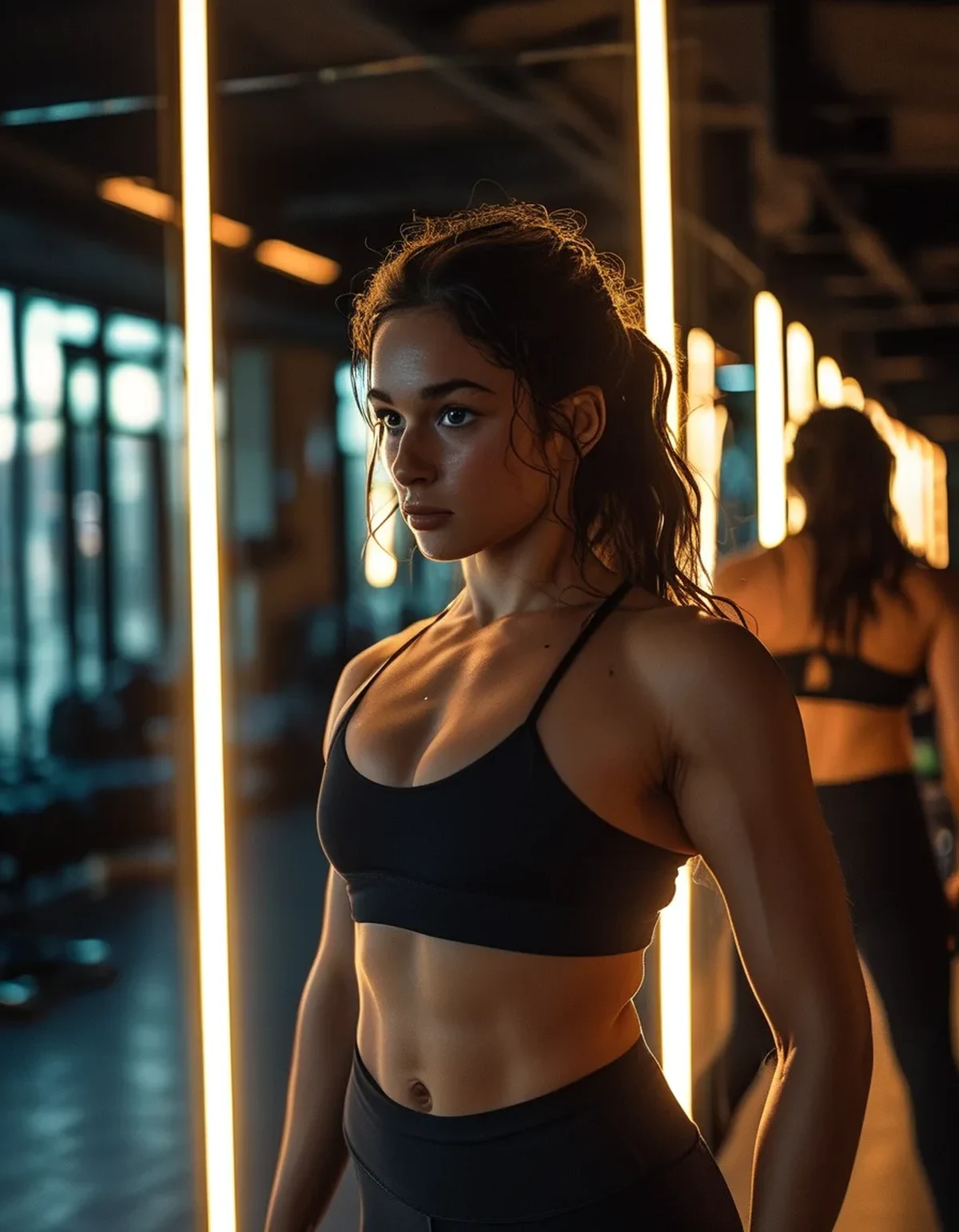
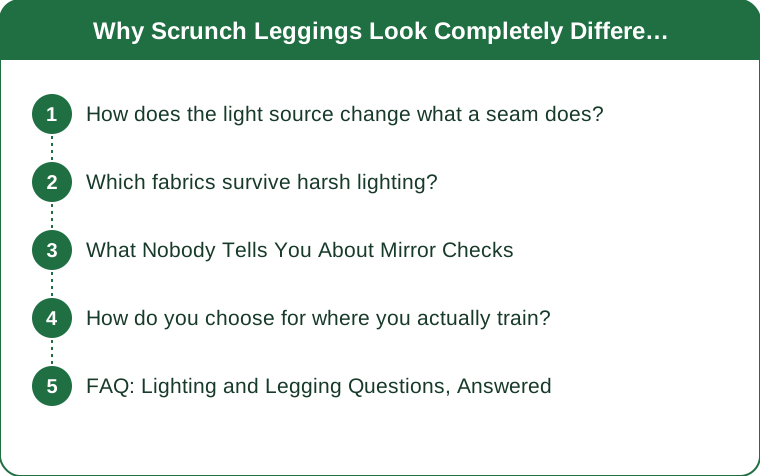
How does the light source change what a seam does?
Because the entire effect is shadow, and shadow is a function of angle.
Scrunch and contour seams create shape by casting shadow along the seam line. The seam gathers the fabric slightly, that gather catches light on one side and casts shade on the other, and your eye reads that contrast as dimension. This is the same principle as contouring in makeup.
Side lighting maximizes it. A window or a lamp at roughly your height throws light across the fabric, which means every gather casts a long, visible shadow. This is why bedroom mirrors near a window are so flattering, and it is why the fitting-room version and the home version disagree.
Overhead lighting minimizes it on vertical surfaces and exaggerates it on horizontal ones. Gym lights are directly above you. Light falls down the front of your legs with almost no cross-angle, so front seams nearly disappear. Meanwhile any horizontal gather across the back catches a hard top-down shadow that reads much stronger than it did at home.
Hard light makes edges sharp, soft light makes them gradual. A bare LED panel produces high-contrast, hard-edged shadows. A lamp through a shade produces a gradient. The same seam looks like a crisp line under one and a soft curve under the other.
Which fabrics survive harsh lighting?
Matte, dense, and mid-tone. Reliably.
Matte finishes are the most forgiving. A matte surface scatters light evenly, so it looks the same from most angles. A glossy or satin-face fabric reflects specularly — it produces bright highlights wherever the light hits directly, which under overhead gym lights means a bright band down the front of each thigh.
Higher-density knits show less. A thin fabric under hard overhead light reveals surface texture, stitching, and anything underneath. This is the same property that determines squat-proofness, which is why the two qualities travel together.
Ribbed fabrics are a special case. Vertical ribs under overhead lighting create their own fine shadows, which reads as texture and generally looks good. Under side lighting they can read as more prominent than intended. Ribbed is the one texture that often performs better in the gym than at home.
Mid-tones are the safest. Black hides seam detail under bright light because there is not enough tonal range for shadow to show. Very light colors show everything. A mid-tone — charcoal, deep olive, dusty rose, navy — has the range to show shape without exposing every detail.
Anything with a sheen photographs worse than it looks. If a gym mirror selfie is part of the point, this matters more than the in-person read.
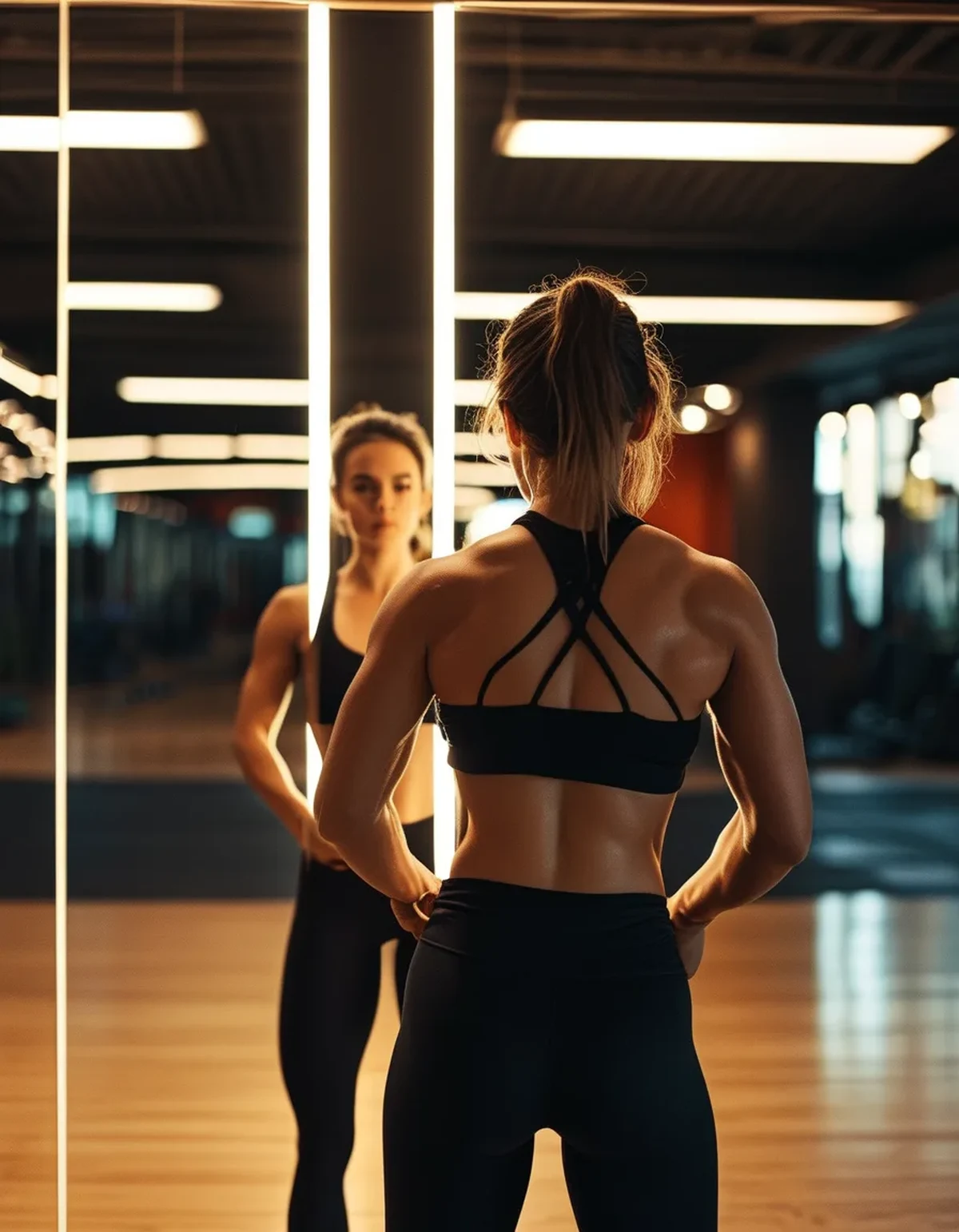
What Nobody Tells You About Mirror Checks
The store fitting room is the least representative lighting you will encounter. Fitting rooms are deliberately lit to flatter — usually soft, warm, and angled. It is the one place you can be sure the leggings will not look like that anywhere else.
Check in at least two lighting conditions before deciding. Near a window, and under a ceiling light. If they hold up in both, they will hold up in a gym.
Your own bedroom mirror is probably side-lit and generous. If you love a pair at home and are consistently disappointed elsewhere, this is why — and the answer is a matte fabric rather than a different cut.
Movement matters more than standing still. Seams that look great standing can bunch or shift in a squat. Do an actual squat in the fitting room, and look at the mirror at the bottom of it, not on the way up.
Phone cameras are harsher than mirrors. A camera flattens dimension and blows out highlights, so a glossy fabric that looks fine in person can look shiny and cheap in a photo. If you are going to take gym photos, choose for the camera — it is the stricter judge.
And the one people find hardest to accept: no single pair looks best in every light. Choosing for the light you are actually in most often is the real decision.
How do you choose for where you actually train?
Match the fabric to the room.
Big-box gyms with overhead fluorescents or LED panels: matte, mid-tone, higher density. Skip anything with a sheen. Ribbed textures perform well here.
Boutique studios with warm, low, side-angled lighting: almost anything works, and this is where glossy and contour-seam pairs genuinely shine. This is the lighting the marketing photos were shot in.
Home workouts near a window: side lighting, so scrunch and contour effects read strongly. You can go with lighter colors and softer fabrics here than you could in a gym.
Outdoor training: the harshest test there is. Direct overhead sun at midday is maximum-contrast top-down light, and it reveals thin fabric, sheen, and every seam. Matte and dense is the only reliable answer.
A practical shortcut: if you own one pair you consistently feel good in across every setting, look at what it is made of and buy that fabric again in another color. The fabric is doing far more of the work than the cut is, and fabric is the spec most people never look at.
And late-summer note: as the sun angle drops through September, outdoor light becomes more side-on and generally more flattering, which is a small but real reason morning outdoor sessions photograph better than midday ones.
FAQ: Lighting and Legging Questions, Answered
Why do they look better in the store than at home?
Fitting room lighting is designed for it — soft, warm, and usually angled from the front or side, which minimizes shadow in unflattering places and maximizes it in flattering ones. It is not a trick so much as a design choice, but it does mean you should not decide there alone.
Does the color really matter that much?
Yes, more than most people expect. Black is the safest for hiding detail but also hides the seam effect you paid for. Mid-tones show shape best. Very light colors show absolutely everything, including anything underneath, and are the least forgiving under hard light.
Should I just buy matte everything?
For gym use, matte is the more versatile choice and it holds up in the widest range of conditions. Glossy and satin finishes have a real place for studio classes and photos in controlled lighting — just know you are choosing them for a specific room rather than for all of them.
TL;DR:
- Scrunch and contour seams work by casting shadow, so the light angle decides how they read
- Side lighting at home flatters the effect; overhead gym lighting flattens the front and exaggerates the back
- Matte, higher-density, mid-tone fabrics hold up in the widest range of lighting; glossy finishes only work in controlled light
- Check in two lighting conditions and squat in front of the mirror before deciding
The pair you love at home is not lying to you. It is just describing one room, and the fabric is what determines whether that description travels.
See It in Motion
Seen here: Super High Waist Embossed Yoga Leggings with Inner Pocket — shop it on bubblelime.com
Keep Reading
This article is for general informational and styling purposes only. Fit, sizing, and product availability may vary.