Why Scrunch Leggings Show Sweat Differently Than Smooth Ones
Quick Answer: Scrunch and ruched leggings show sweat differently because the gathered fabric has more surface area and varying thickness across the same panel, so moisture collects in the folds and darkens unevenly rather than spreading into a single visible patch. In practice this means scrunch styles usually hide sweat better than smooth ones on the seat and thigh, but hold moisture longer and take noticeably more time to dry.
You wore smooth leggings on Tuesday and could see exactly where you had been sitting. You wore the scrunch pair on Thursday and could not, despite sweating more.
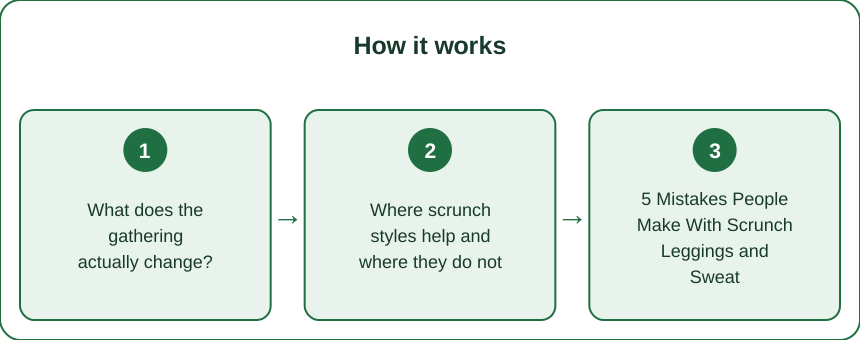
What does the gathering actually change?
It changes the geometry of the fabric, and moisture behaviour follows geometry.
Scrunch construction gathers more fabric into the same area. A ruched panel might contain a third more material than a flat one covering the same space, held in folds by seam placement or elastic threading.
Folds create thickness variation. Where the fabric doubles over, it is thicker; where it pulls flat over the curve, it is thinner. Light behaves differently across the two, which is the whole reason the style has a visual effect in the first place.
Moisture collects in the fold valleys. Sweat migrates into the recesses rather than sitting on the surface, which means it is physically less visible even when there is more of it.
Existing shadow disguises darkening. Sweat shows because wet fabric is darker than dry fabric. A surface that already has light and shadow variation across it hides that darkening far more effectively than a uniform flat panel.
But the same folds slow evaporation. Moisture trapped between two layers of fabric has less exposure to air, which is why scrunch styles stay damp longer after the session ends.
Net effect: better during, worse after. Which of those matters more depends entirely on what you are doing afterwards.
Where scrunch styles help and where they do not
The advantage is specific to certain areas and certain activities.
The seat is where it helps most. This is the classic sweat-mark location and precisely where scrunch panels are usually placed. The visual disguise is genuine and substantial.
Back of the thigh benefits too. Especially after seated work - cycling, rowing, machine-based training - where contact and pressure concentrate moisture.
The waistband is unaffected and often worse. Almost never scrunched, usually the thickest part of the garment, and it holds moisture with no visual disguise at all. This is where sweat shows on scrunch leggings.
Behind the knee is the other weak point. A high-sweat area with natural fabric bunching that stays damp for a long time after the session.
High-intensity work overwhelms the effect. Disguise works up to a point. Past a certain amount of saturation, the whole panel darkens and the texture stops helping.
And humid weather changes the calculation. In humid conditions where nothing dries, the slower evaporation of scrunch styles becomes the dominant factor, and a smooth, thin, fast-drying legging is the more comfortable choice even if it shows more.
5 Mistakes People Make With Scrunch Leggings and Sweat
Mistake 1: Assuming thicker means better coverage in every way. Thicker scrunch fabric hides sweat marks and holds heat and moisture. For a hot yoga class or a humid August run, that is the wrong trade.
Mistake 2: Rolling them into the bag after a session. The folds hold moisture, and a scrunch legging rolled damp stays wet for hours. This is the fastest route to permanent odour in the fabric.
Mistake 3: Judging the fit in a dry changing room. Gathered panels behave differently once damp - the folds cling and settle, which changes both the coverage and the look. Any scrunch style needs a squat test and a realistic assessment of what happens when the fabric is wet.
Mistake 4: Using fabric softener. It coats the fibres, reduces wicking, and makes the fold recesses hold moisture even longer. Softener is a poor idea on all activewear and a particularly poor one here.
Mistake 5: Wearing the same pair for back-to-back sessions. A smooth legging can sometimes dry enough between a morning and evening session. A scrunch pair will not, and putting damp gathered fabric back on is genuinely unpleasant.
Choosing and caring for them
Small choices that make a large difference in practice.
Check where the ruching sits before buying. Seat-only ruching gives the visual benefit without wrapping the whole leg in doubled fabric, which is usually the best compromise.
Prefer a lighter base fabric in a scrunch style. Since the gathering already adds effective thickness, a lighter weight material produces a garment that performs like a mid-weight rather than a heavy one.
Test the drying time once, deliberately. Wet a small area, hang it, and see how long it takes. Knowing whether your pair dries in two hours or six changes how you plan around them.
Hang rather than fold after washing. Draping over a rail lets the folds open and air circulate. Folding them wet defeats the whole drying process.
Wash inside out in cold water. It protects the gathered surface from abrasion, which is what causes the pilling that scrunch styles are prone to along the fold ridges.
Air dry, never tumble. Heat damages elastane, and elastane is what holds the gathering in shape. A scrunch pair that has lost its gather has lost the entire point of the design.
And keep two pairs if you train often. Given the drying time, one pair of scrunch leggings does not support a five-day training week.
FAQ: Scrunch Leggings and Sweat Questions, Answered
Do scrunch leggings hide sweat better than smooth ones?
On the seat and back of the thigh, yes, noticeably. The gathered surface already has light and shadow variation, which disguises the darkening that makes sweat visible on a flat panel.
Do they take longer to dry?
Yes. Moisture sits in the fold recesses with less air exposure, so scrunch styles stay damp considerably longer than smooth leggings of the same fabric weight.
Are scrunch leggings a bad choice for hot weather?
Often, yes. The gathering adds effective thickness and slows evaporation, which matters more than sweat disguise in humid conditions. A thinner, faster-drying smooth pair is usually more comfortable.
Where does sweat show most on scrunch leggings?
The waistband and behind the knee. Neither is usually ruched, both hold moisture, and the waistband is typically the thickest part of the garment.
How should I wash scrunch leggings?
Inside out in cold water, no fabric softener, hung to dry rather than folded or tumbled. Heat damages the elastane that holds the gather, and a scrunch pair that has lost its texture has lost its purpose.
TL;DR:
- Gathered fabric has built-in light and shadow variation, which disguises the darkening that makes sweat visible.
- Moisture collects in the fold recesses, so scrunch styles hide sweat during and stay damp longer after.
- The seat benefits most; the waistband and behind the knee are the weak points.
- In humid weather, slower drying outweighs the visual advantage - go smooth and thin.
- Wash inside out in cold water, hang to dry, and never use softener or a tumble dryer.
Better during the workout, worse afterwards. Choose based on which half of that you care about more.
See It in Motion
Seen here: High Waist Yoga Leggings with Side Pockets — shop it on bubblelime.com
Keep Reading
This article is for general informational and styling purposes only. Fit, sizing, and product availability may vary.